Seasonal Shifts in Virtual Sports Wagering Participation Among Different Age Groups
Leon Flores · Aug 5, 2026
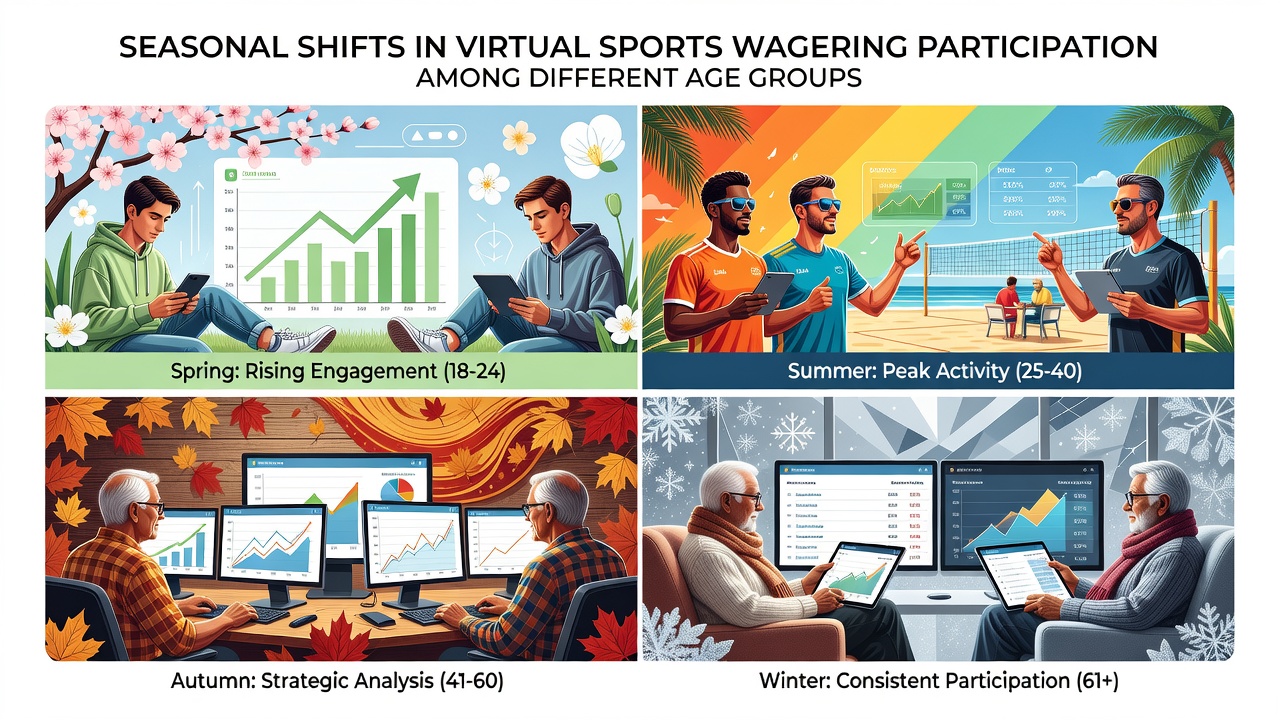
Seasonal Shifts in Virtual Sports Wagering Participation Among Different Age Groups
Virtual sports wagering involves simulated events such as digital horse racing, football matches, and tennis tournaments that run on continuous schedules independent of real-world calendars, yet participation levels still demonstrate clear seasonal variations according to aggregated platform data. Researchers tracking these patterns through 2025 and into 2026 have identified recurring cycles where overall volume rises during winter months and dips in summer across multiple jurisdictions, while the magnitude and timing of those shifts differ markedly by age cohort.
Seasonal Patterns in Overall Participation
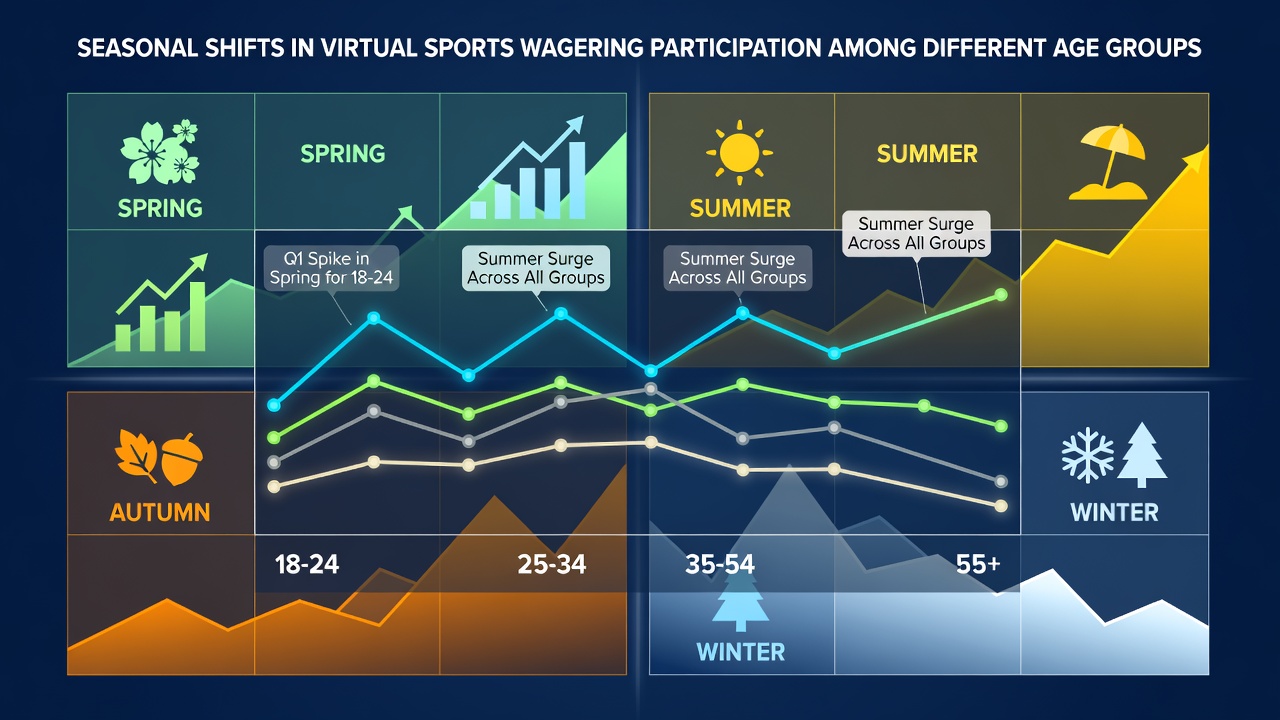
Data collected from major operators shows virtual sports handle typically peaks between November and February when real sports leagues enter breaks or experience weather-related postponements, and participation contracts again during July and August when outdoor activities compete for attention. Figures from the Pennsylvania Gaming Control Board reveal that virtual sports revenue in regulated markets grew 14 percent year-over-year during the first quarter of 2026, while August 2026 numbers reflected a 9 percent decline compared with the prior winter peak, a pattern consistent with earlier years yet more pronounced among certain demographics.
Age-Specific Responses to Seasonal Changes
Younger participants aged 18 to 34 tend to increase activity during late fall and early winter, aligning with the start of major esports tournaments and holiday periods that coincide wth increased screen time, whereas those aged 35 to 54 show steadier engagement that dips mainly during summer vacation windows. Observers note that bettors over 55 maintain relatively consistent volumes year-round, with only modest reductions in August that operators attribute to travel rather than disinterest in the product itself.
Studies conducted by academic teams at institutions such as the University of Nevada, Las Vegas have documented that individuals in the 18-24 bracket allocate a higher share of their virtual sports activity to mobile sessions during periods of inclement weather, while the 45-54 group demonstrates greater stability tied to evening routines that remain largely unchanged across seasons. These distinctions become visible when operators segment transaction logs by birth year cohorts and overlay them against regional weather and calendar data.
Influencing Factors Beyond Weather
Holiday schedules and school calendars further modulate participation rates, with operators reporting spikes among college-aged users during winter breaks that extend through early January, followed by noticeable drops once academic terms resume. In contrast, working-age adults between 30 and 50 display smaller but more predictable adjustments around national holidays, and retirees show minimal deviation except when family visits or travel interrupt habitual betting windows. Platform analytics indicate that promotional campaigns timed to these calendar events produce stronger lift among younger cohorts during shoulder seasons, while older groups respond more consistently to ongoing loyalty mechanics regardless of month.
Regional and Platform Variations
Operators in North American markets have observed that virtual sports participation among 25- to 34-year-olds rises sharply in regions experiencing prolonged winter conditions, whereas Australian platforms report more muted seasonal swings because virtual events fill gaps created by different real-sport calendars. Cross-border comparisons compiled by the Victorian Commission for Gambling and Liquor Regulation show that age-based seasonal elasticity remains consistent even when underlying product mixes vary, suggesting the patterns stem from lifestyle factors rather than specific event availability alone.
Conclusion
Platform data through August 2026 continues to illustrate that seasonal shifts in virtual sports wagering participation follow repeatable trajectories differentiated by age, with younger users exhibiting greater amplitude in volume changes tied to academic and social calendars, middle-aged cohorts displaying moderate adjustments linked to work and family obligations, and older participants maintaining steadier engagement year-round. These measurable patterns allow operators and regulators to anticipate demand fluctuations and allocate resources accordingly without relying on subjective interpretation of user behavior.